
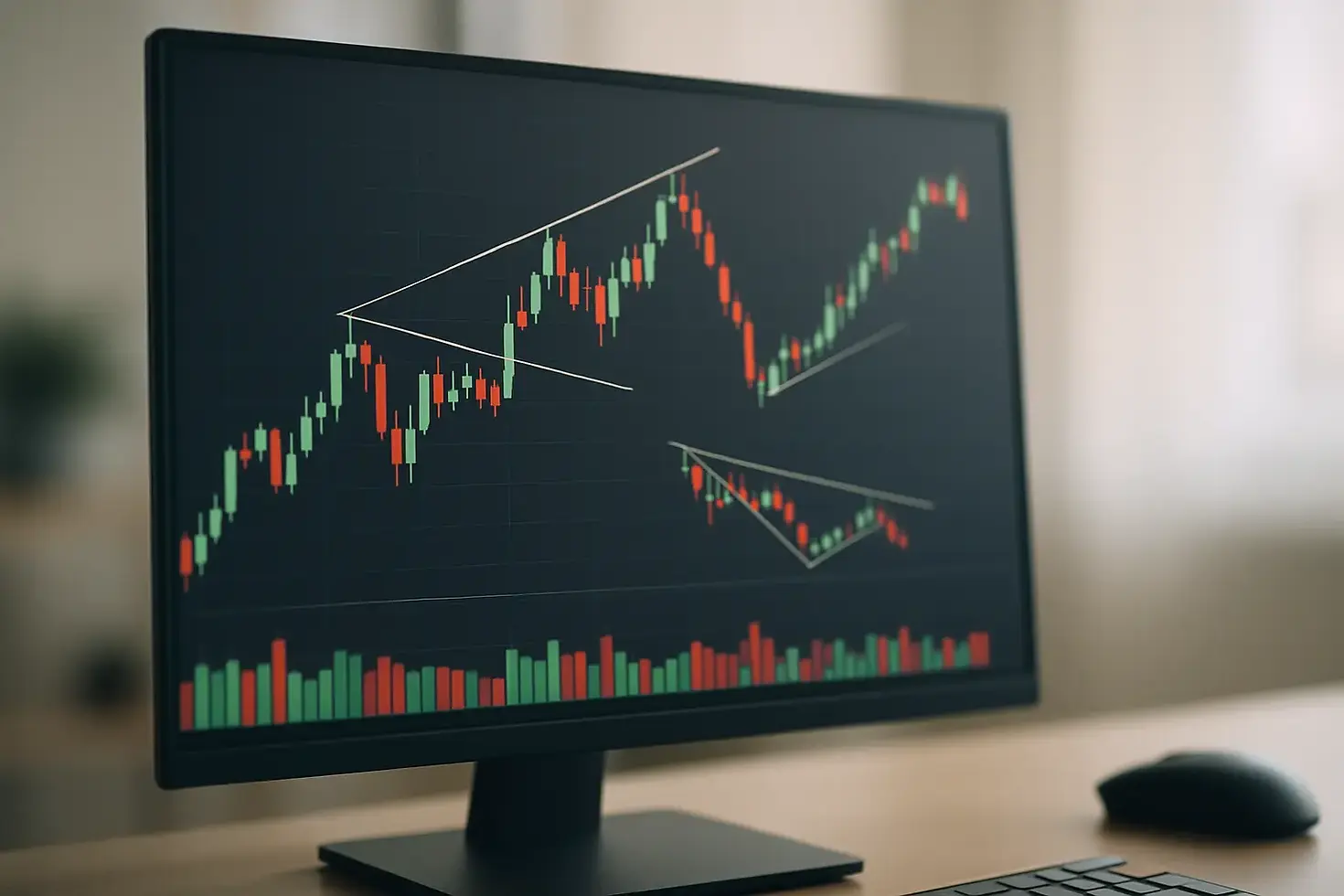
Chart patterns: useful signals or costly noise?
- mirrorwealthfinanc
- Mar 18
- 2 min read

Most people start trading by staring at candlesticks and trying to “spot the pattern” before the move happens. Then real life kicks in: work, sleep, distractions - and the market still does what it wants.
Chart patterns are simply recurring shapes on a price chart that traders believe reflect crowd behaviour. Think of them as visual shortcuts: instead of calculating everything, you recognise a formation and anticipate what might happen next.
What chart patterns are trying to tell you
At their best, chart patterns translate supply and demand into something you can act on. A breakout pattern says: price has been contained, pressure is building, and a move could be coming. A reversal pattern says: the trend is tiring and the other side is starting to win.
That “could” matters. Patterns are probabilities, not promises. They work best when they line up with context: the broader trend, clear support and resistance, and a market that’s actually moving (not chopping sideways for hours).
Where chart patterns go wrong for everyday investors
The problem isn’t that chart patterns are useless. It’s that manual pattern trading is easy to get wrong.
First, patterns are subjective. Two traders can look at the same chart and draw two different triangles. Second, you can spot them everywhere if you’re looking hard enough, which leads to overtrading. Third, execution matters: entries, stop losses, position size, and what you do when the breakout fakes out. Miss one step and a “textbook setup” becomes an expensive lesson.
And finally: time. If you’re checking charts between meetings or late at night, you’re often reacting, not trading a repeatable process.
A more practical way to use patterns
If you like the logic behind chart patterns, the sensible move is to treat them as part of a system, not a hobby. That means clear rules, consistent risk limits, and the discipline to take the same type of trade the same way - every time.
For many people, the real upgrade is removing the human bottleneck altogether. Automation doesn’t get bored, emotional, or distracted. If you want exposure to forex and gold without living on charts, copy trading can do the execution for you while your funds stay in your own regulated broker account. If you’re curious how that works in plain English, read How Does Forex Copy Trading Work, Really?.
The helpful way to think about chart patterns is simple: they’re a signal, not a strategy - and your results depend on how consistently that signal gets executed.



Comments